



 Chernivtsi region,
  +38 (050) 50 50 103
 Mon.-Fri.: 08:00-20:00,
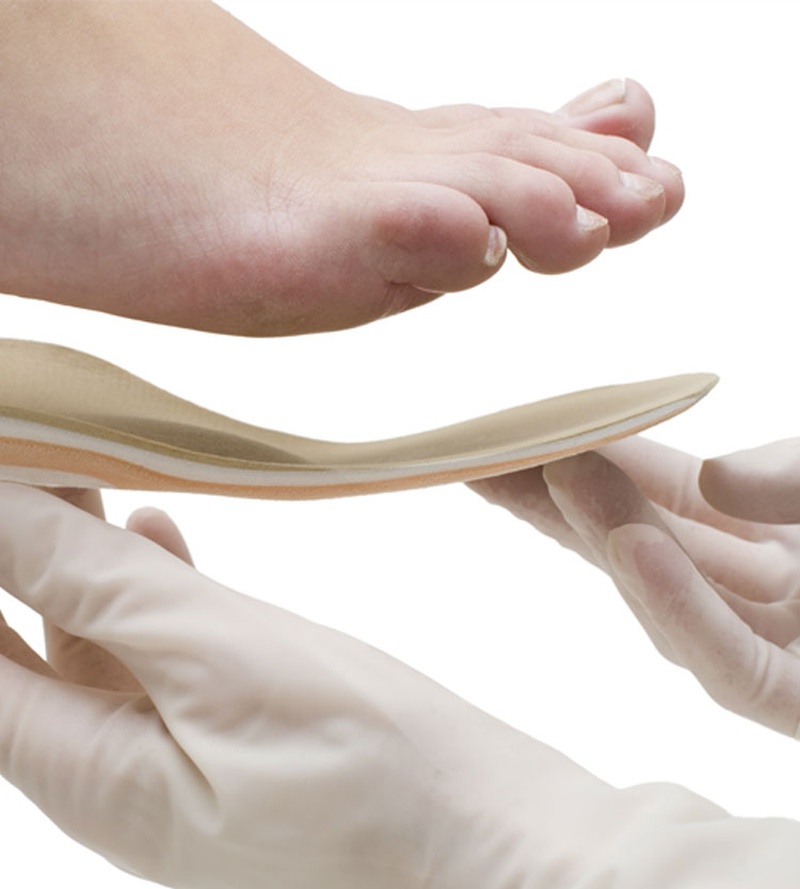
In Swedish-Ukrainian medical center «Angelholm» performed orthopedic foot modeling, diagnostics and manufacture of orthopedic insoles foot patient individually. This approach allows you to select and make the insole that will be appropriate for a particular patient, solving his problem, correcting the defect that is specific to that person, and not in general the average patient. In each case, the insole is created and subsequently adjusted individually.
Indications for wearing individual orthopedic insoles:
- Flat feet: transverse, longitudinal, combined;
- heel spur (link to "heel spur");
- Congenital and acquired deformities of the foot and ankle;
- Valgus deviation of the first toe;
- Shortening of the limb;
- Morton's neuroma;
- As part of complex treatment for gouty and rheumatic lesions of the joints of the lower extremities (gout, rheumatism);
- In the complex treatment and prevention of diabetic foot syndrome;
- Pain in the foot, ankle, knee, hip, back;
- Pregnancy;
- Prevention of varicose veins of the lower extremities;
- Flatfoot - deformation of the foot, characterized by flattening of its vaults.
By the origin of flatfoot distinguish:
- congenital flat foot;
- traumatic;
- paralytic;
- static.
The problem of flatfoot has become more urgent today, because most of the movements of a person's foot are carried out on a solid "aggressive" surface (asphalt, parquet flooring, paving, etc.). Therefore, even healthy people in this regard often complain of pain, feeling tired feet in the evening. One of the methods in the complex solution of this problem is to support the proper functioning of the arches of the feet and reduce the impact on them. It is an outlet for people who suffer from flat feet, those who work most of the time standing, athletes, active people, those for whom their health is the key to successful activity.
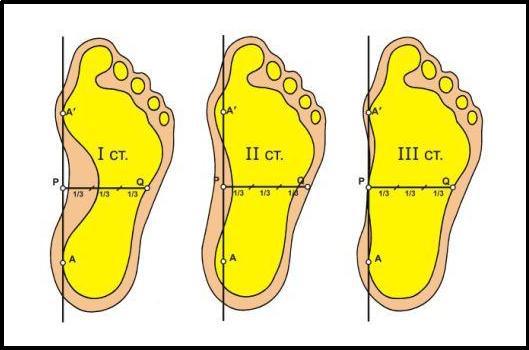
Flatfoot is directly dependent on body weight: the greater the mass and, therefore, the load on the feet, the more pronounced longitudinal flatfoot. This pathology occurs mainly in women. Longitudinal flatfoot occurs most often at the age of 16-25 years, transverse - in 35-50 years. Prolonged walking or work combined with a long standing position, sooner or later, will cause overload even in the normal foot.
Wearing an orthopedic insole allows more even distribution of load on the foot, limits excessive mobility of the foot, and also plays the role of an additional spring. For those with flat feet for a long time, the selection of insoles can be complicated by the presence of deformations and numerous zones of overload. In such cases it is advisable to select individual holdings orthopedic devices manufactured using special equipment using certain data instrumental investigation of the patient.
Effects provided by individual orthopedic insole:
- Supporting the transverse and longitudinal archs of the foot
- Increased resistance when standing and walking
- Significant improvement in the damping function of the arches of the foot and smoothing the shock load at the time of bearing
- The most effective interaction of the foot with the support surface and the formation of a clearly directed forward momentum of force during repulsion
- The formation of a smooth stroke (due to optimization of movements of supination and pronation of the top)
- Improved circulation of the feet
- Stop fatigue prevention
- Prevention of pathological conditions of the musculoskeletal system
- Reducing the load on the spine, hip, knee and ankle joints
- Elimination of scoliotic posture of the spine, elimination of discomfort and back pain (due to the alignment of the pelvis and correction of the length of the limb in the manufacture of insole)
- Improving the overall well-being of patients with the insole reduces the shock and weight load on the foot and spine, maintain anatomically correct position of the foot.
Orthopedic insoles correct painful conditions and prevent further deformities. Specialists of the Swedish-Ukrainian medical center "Angelholm" will help you stop and compensate for the development of pathologies of the foot, disorders of the posture and all musculoskeletal system, as well as other body systems, which are affected by the condition of the musculoskeletal system.
The orthopedic doctor will conduct a visual diagnosis of posture and gait, clinically evaluate the structure and function of the foot. Such diagnostics include clinical and functional tests to assess the condition of the musculoskeletal system both in the standing position and in the movement. The assessment of the condition of the feet is carried out with the help of a special device - a planoscope or with the use of computer diagnostics.
Plantohraf helps to identify:
- The degree of longitudinal and transverse flatfoot;
- Deformation of the arch of the foot, the degree of their change and zone of overload and pressure distribution on the departments of the foot;
- The position of the heel bone of the patient and the capacity of the lower extremities.
Then the specialist will select the model of the insole that is right for you, taking into account the degree of deformation, the presence of pain, body weight, type of shoes, the level of physical activity.
Next, the specialist in the manufacture of the insole itself works.
It is important to note that the materials used to make the insoles have high dynamic elasticity and allow the muscles and ligaments to work without preventing their atrophy. As a result of the use of such insoles, after some time (about 12 months), depending on the body weight and the intensity of walking (load), the arch supports change their original shape and should be replaced. Baby insoles should be replaced as the baby grows, as the size of the shoe changes.
| Doctor | Name | Specialization | Reception time (Sunday) |
|---|---|---|---|
 |
Білик Сергій Вікторович | Traumatology and Orthopedics | - |